


If a radiator is cold at the top but warm at the bottom, it usually has trapped air inside, and bleeding it is a five minute job most homeowners can do safely themselves. It’s a different story if the whole radiator stays cold, or if you’re bleeding the same one every few weeks, that’s often a sign of a fault an engineer needs to look at rather than a quick fix, something we cover as part of a standard repair visit. This comes up a lot in older properties, a period cottage in Wargrave with original cast iron radiators is a typical example.
Why does a radiator need bleeding?
Air gets into a heating system over time, through top ups, new installations, or just general wear, and it rises to the top of each radiator. That trapped air stops hot water filling the whole radiator, so the top stays cold while the bottom heats up normally. Bleeding the radiator releases the air and lets water fill the space properly again.
Signs a radiator needs bleeding
Look out for:
- Cold patches at the top of the radiator, with the bottom still warm
- Gurgling or bubbling sounds when the heating is on
- The radiator taking longer than usual to heat up
- Reduced heat output even though the boiler is working normally
How to bleed a radiator safely
- Turn the heating off and let the radiators cool down before you start
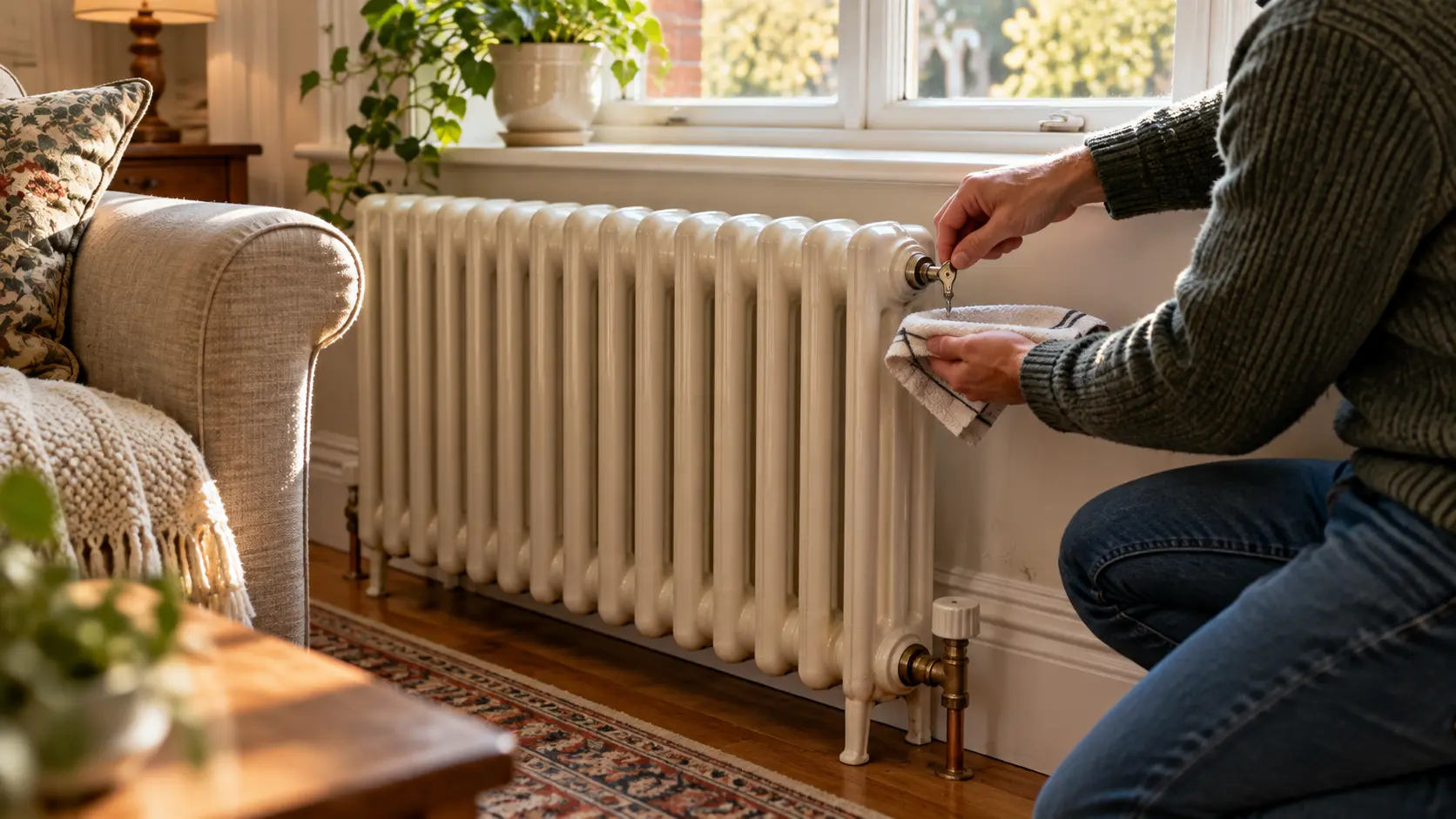
- Find the bleed valve, a small square fitting near the top of the radiator, usually at one end
- Fit a radiator bleed key into the valve, or use a flat screwdriver if it’s the slotted type
- Hold a cloth underneath to catch any drips, then turn the key slowly anticlockwise
- You’ll hear a hissing sound as air escapes, keep the key steady and wait
- Once the hissing stops and water starts to trickle out, close the valve by turning it clockwise
- Check the boiler pressure afterwards and top it up if it’s dropped below the normal range shown in the manual
Work on one radiator at a time, and always start with the ground floor radiators before moving upstairs if more than one needs bleeding.
What if the radiator is still cold after bleeding?
If you’ve bled a radiator and it’s still not heating properly, or the same radiator needs bleeding again within a few weeks, that points to something else, a sludge build up, a faulty valve, or an issue with the boiler pressure or pump. This is where it’s worth getting an engineer to take a look rather than repeating the same fix, particularly in an older property in Wargrave or anywhere else with an original heating system that’s due an update.
When should I call a heating engineer instead of bleeding it myself?
Bleeding a radiator is safe to do yourself, but the following are jobs for a registered engineer, not a DIY fix:
| Do it yourself | Call an engineer |
|---|---|
| One radiator cold at the top, warm at the bottom | Multiple radiators cold, or the same one needs bleeding repeatedly |
| Occasional trapped air after a top up | Boiler pressure keeps dropping after you top it up |
| Simple hissing and a trickle of water from the valve | Leaks, banging noises, or discoloured water from the valve |
| A radiator that’s cold at the top only | A radiator that’s cold all over |
Anything involving the boiler itself, gas connections, the flue, or internal components should always be left to a Gas Safe registered engineer. Bleeding a radiator doesn’t touch any of that, it’s a safe, external job on the radiator valve alone.
Does bleeding a radiator affect my boiler warranty?
No, bleeding a radiator is considered normal homeowner maintenance and won’t affect your boiler’s warranty. It’s a different matter if you start adjusting anything inside the boiler itself, that should always be left to your registered engineer during a service or repair visit.
How often should I need to bleed my radiators?
Most homes need this once or twice a year, often at the start of the heating season when radiators that have been off all summer are switched back on. If you’re bleeding the same radiator more often than that, it’s worth having it checked rather than treating it as routine.
Get it checked by our team
If bleeding a radiator hasn’t solved the problem, or you’d rather leave it to a professional, our engineers can take a look and diagnose what’s actually going on. We work across Henley-on-Thames, Marlow, Sonning, Wargrave, Shiplake, Cookham, Nettlebed and the surrounding areas. Get in touch to arrange a visit.