


A smart thermostat is worth it for most homes, it gives you more control over your heating than a standard timer and dial, usually pays for itself over time through lower energy use, and works with most modern boiler systems as well as heat pumps. Whether it’s the right upgrade for you depends on your current setup, how you use your heating day to day, and what you’re hoping to get out of it. It’s a popular request in newer developments like Cookham, where homeowners are already used to app-based control of other things in the house.
What does a smart thermostat actually do?
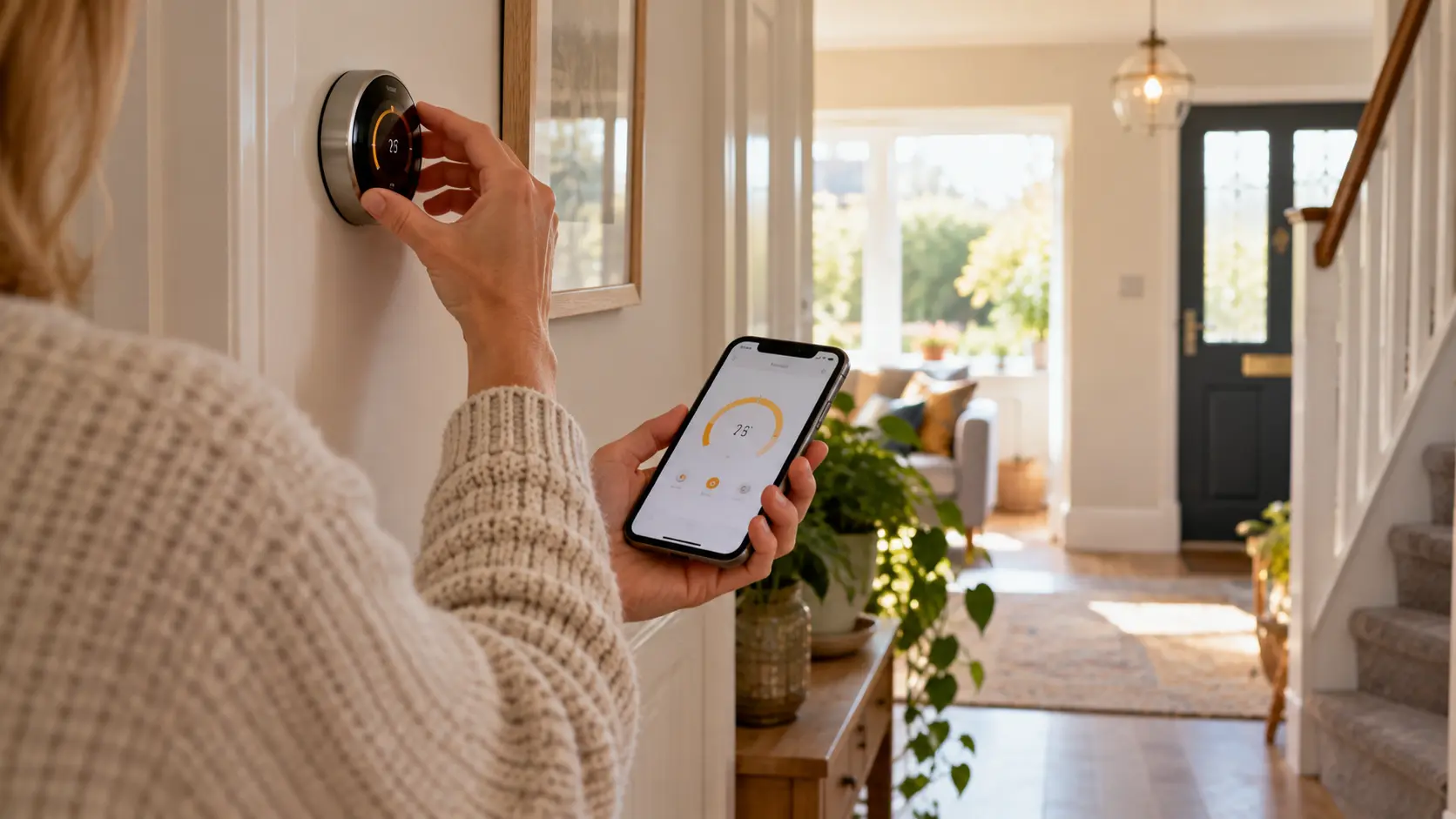
A smart thermostat replaces your standard room thermostat and lets you control your heating from a phone app, rather than just a dial on the wall or a basic timer. Most models let you set schedules, adjust the temperature remotely, and see how much energy you’re using. Some go further, learning your routine over time and adjusting automatically, or controlling individual rooms separately rather than heating the whole house to one setting.
What are the main benefits?
- Control your heating remotely, so it’s warm when you get home rather than running all day
- More detailed scheduling than a basic timer, different settings for weekdays and weekends, for example
- Energy use data that shows where your heating costs are actually going
- Some models support zoning, heating rooms you’re using rather than the whole house at once
- Geofencing on some systems, turning heating down automatically when everyone’s out
Do smart thermostats actually save money?
They can, mainly by cutting down on heating running when nobody needs it, a house left on a fixed schedule regardless of whether anyone’s home wastes more than one with remote or automatic control. How much you save depends on your current habits, a home that’s already well managed with a standard timer will see a smaller difference than one that’s often left heating an empty house.
Standard thermostat vs smart thermostat
| Standard thermostat | Smart thermostat | |
|---|---|---|
| Control | Dial or basic timer, on site only | App based, on site and remote |
| Scheduling | Fixed daily or weekly pattern | Flexible, often room by room |
| Energy insight | None | Usage data and reports in most apps |
| Learning behaviour | No | Some models adjust automatically over time |
| Works with a boiler | Yes, most systems | Yes, most systems, check compatibility first |
| Works with a heat pump | Rarely designed for it | Yes, most modern models support heat pump systems |
Will a smart thermostat work with my boiler?
Most gas, oil and LPG boilers are compatible with smart thermostats, though it’s worth checking your specific model before buying one, since a small number of older or less common systems aren’t supported. If you’re considering a heat pump installation rather than sticking with your existing boiler, smart controls are just as relevant there, most modern heat pump systems are designed to work with app based thermostats from the outset.
Is installation something I can do myself?
Some smart thermostats are designed for straightforward DIY fitting, but connecting one to your boiler’s wiring is best left to a qualified engineer, particularly if your current system is older or the wiring isn’t straightforward. Getting it fitted properly the first time avoids call outs later for a thermostat that isn’t controlling the boiler correctly.
Are there any downsides?
A smart thermostat is only as useful as the habits it changes, if you’re already disciplined about turning heating off when you don’t need it, the savings will be smaller. Some models also rely on a stable home wifi connection to work properly, and the upfront cost is higher than a basic thermostat, though it’s usually a modest one-off cost against a boiler installation as a whole.
Ask us about adding smart controls
If you’re weighing up a smart thermostat alongside a new boiler or heat pump installation, or want one added to your existing system, our team can advise on compatibility and fit it properly. We cover Henley-on-Thames, Marlow, Sonning, Wargrave, Shiplake, Cookham, Nettlebed and the surrounding areas. Get in touch to find out more.