If you’re replacing your heating system, an air source heat pump is now a genuine alternative to a boiler, not just an option for new-build homes. Which one actually suits you depends on your current fuel type, how well insulated your home is, and what you’re trying to fix, lower bills, lower carbon emissions, or just a heating system that works.
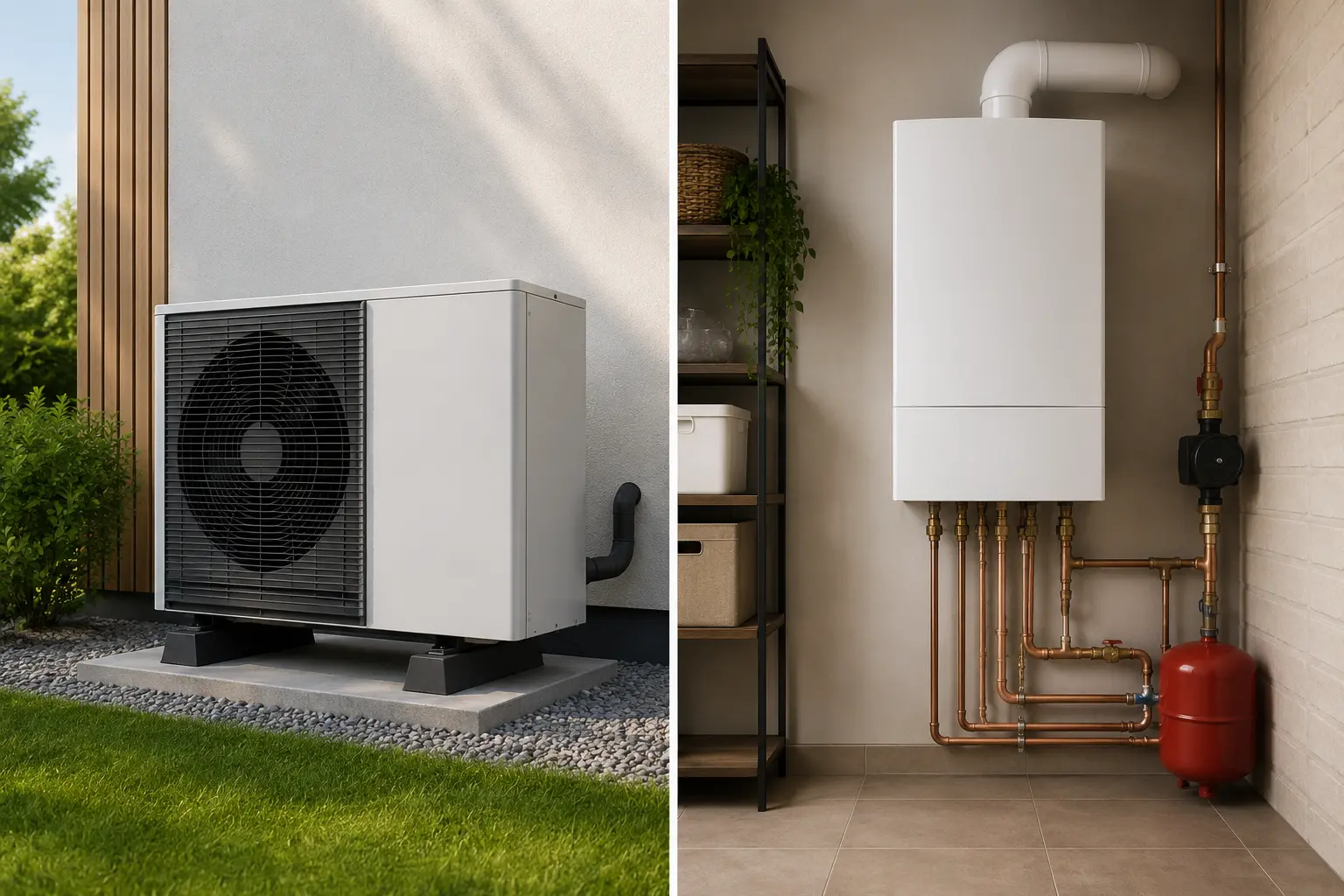
At a glance:
| Boiler (gas, oil or LPG) | Air source heat pump | |
|---|---|---|
| Install cost, replacing an existing boiler | Lower, existing pipework and radiators are usually reused as they are | Higher, radiators or underfloor heating often need upsizing to work well at lower flow temperatures |
| Install cost, no existing central heating | Similar base cost either way for pipework and radiators or underfloor heating | Gap narrows, though the government grant generally doesn’t apply here, see below |
| Running cost | Depends on fuel price | Can be lower, especially in a well insulated home |
| Carbon emissions | Higher | Lower |
| Maintenance | Annual service | Annual check, generally less to go wrong |
| Best suited to | Straightforward replacements, older or less insulated homes | Well insulated homes, renovations, underfloor heating, or a system designed around it from scratch |
How does a heat pump compare to a gas boiler?
If you’re on mains gas in a town like Marlow, a gas boiler is usually the cheaper system to install and the more familiar choice, most homes already have the pipework and radiators sized for one. A heat pump can still work well here, especially in a well insulated modern home, but it runs at lower temperatures over longer periods, so older radiators or poor insulation can limit how effective it is.
How does a heat pump compare to an oil boiler?
For a property off the mains gas grid, like a farmhouse in Nettlebed, the comparison looks different. An oil boiler is a well proven option for rural homes, and modern versions are efficient, but you’re still relying on deliveries and on-site storage. A heat pump removes that dependency entirely, drawing energy from the air instead, though the upfront installation cost is higher before any government incentive is applied.
How does a heat pump compare to an LPG boiler?
In a mixed area like Shiplake, where some properties are on LPG rather than mains gas, the choice often comes down to running costs versus install cost. LPG is a familiar, similarly performing alternative to mains gas, while a heat pump cuts out the tank and delivery altogether, at a higher initial cost that current grants can help offset.
What are the actual benefits of a heat pump?
Beyond removing you from a fuel delivery or mains gas price rise, a heat pump has a few practical advantages worth weighing up:
- For every 1kWh of electricity used, a heat pump can produce 3 to 4kWh of heat, which is where most of the running cost saving comes from
- Lower carbon emissions than gas or oil, since it’s transferring heat rather than burning fuel
- A long lifespan when properly maintained, and generally less to go wrong than a combustion boiler
- Works well alongside solar PV, underfloor heating, or a smart hot water cylinder if you’re already planning those upgrades
- Hybrid systems exist too, pairing a heat pump with your existing boiler rather than replacing it outright
The catch is that all of this depends on your home holding heat well. In a poorly insulated property, a heat pump has to work harder to hit the same comfort level, which eats into the running cost savings.
What if I have no existing central heating at all?
This comes up more than you’d expect, an old barn conversion or a Nettlebed farmhouse being brought back into use, for example, where there’s no pipework or radiators to build on. In that situation, a boiler doesn’t have its usual cost advantage, since you’re installing pipework and emitters from nothing either way.
A heat pump can actually make more sense here than in a typical retrofit. Rather than adding it onto radiators that were sized for a boiler’s higher output, you can size the whole system, insulation, radiators or underfloor heating, pipework, around the heat pump’s lower flow temperature from the start. The cost gap that usually favours a boiler mostly comes from upsizing an existing system, and that cost applies whether you’re starting from scratch or not, so it stops being a heat pump specific downside.
One important caveat: the government’s Boiler Upgrade Scheme requires you to be replacing an existing fossil fuel or electric heating system, so a property with no central heating at all generally won’t qualify for the grant, the exception is certain self-build properties. If that’s your situation, it’s worth checking your specific eligibility with us before assuming the grant will apply.
What does it actually cost to switch?
We can’t quote a fixed figure here, costs depend on your property, insulation and the system size, but if you’re replacing an existing fossil fuel or electric system, the government’s Boiler Upgrade Scheme currently offers up to £7,500 towards a heat pump installation. For eligible off-gas grid properties, like a farmhouse in Nettlebed, that rises to £9,000 until 31 March 2027. If cost is the main barrier either way, we also offer boiler finance to spread the cost of a new gas, oil or LPG installation.
Which one should I choose?
As a rough starting point:
- Stick with a boiler if your home has older radiators, limited insulation, or you need a straightforward, lower upfront cost replacement
- Consider a heat pump if your home is well insulated, you want to cut carbon emissions, or you’re already planning underfloor heating or a renovation
- Either way, a site visit is the only reliable way to know what your specific property can support
Is a heat pump worth it if I already have a working boiler?
Not necessarily straight away. If your current boiler is reliable and your home isn’t well insulated, replacing it early with a heat pump may not deliver the savings you’d expect. It’s usually a decision worth timing around when your existing system needs replacing anyway, or around planned insulation upgrades.
Talk it through with our team
Whether you’re comparing a gas boiler, an oil boiler, an LPG system, or a heat pump, we’ll assess your home and talk you through what actually makes sense, not just what’s newest. Book a free survey to get a straight answer for your property.